The toy industry is constantly evolving with new trends, technological innovations, and consumer preferences. One of the most significant keys to the success of toy brands at retail is package design. Arguably, package design plays more of a vital role in the toy industry than in any other, as it’s not only a manner through which manufacturers get their products in front of consumers. It’s also a powerful marketing tool that significantly influences consumer purchasing decisions. Understanding how consumers shop for toys and what elements of packaging appeal to them can lead to more effective design strategies that boost sales and brand loyalty.
Understanding consumer shopping behavior
To create effective toy package design, it’s crucial to first understand how consumers, particularly parents and children, shop for toys. Several factors influence toy purchasing decisions, including age appropriateness, safety concerns, educational value, brand loyalty, visual appeal, and price sensitivity.
Consumers often seek toys that match the child’s age and developmental stage, making packaging that clearly communicates age suitability vital in influencing purchasing decisions.
For example, LEGO does an amazing job of communicating age appropriateness on their packaging by indicating the recommended age range within the key communication hierarchy for each set. This helps parents quickly assess if the toy is suitable for their child and ensures that the toy provides the right level of challenge and enjoyment.
Safety is another top priority for parents, so packaging that highlights safety features, such as non-toxic materials and choking hazard warnings, can reassure consumers and influence their choices. Melissa & Doug is known for emphasizing safety and developmental benefits on their packaging, clear stating that their products are free from harmful chemicals and designed to encourage creativity and learning.
Additionally, many parents prioritize toys that offer educational benefits, so packaging that emphasizes educational aspects, such as skill development or learning outcomes, can appeal to this consumer segment. Osmo is a brand that excels at this by highlighting educational benefits on their packaging. Their products, which blend physical and digital play, emphasize skill development in areas such as coding, math and problem-solving.
Brand loyalty also plays a significant role in purchasing decisions. Established brands often have a competitive advantage due to the trust that they’ve build with consumers over time. The toy industry’s brand leaders, like Hasbro and Mattel foster brand loyalty through package design that maintains visual consistency across their respective brand portfolios.
The role of color and visual appeal
Color plays a vital role in toy package design, as particular colors or color combinations evoke specific emotions and create associations in the minds of consumers. Vibrant colors are often associated with excitement and fun, making them ideal for toy packaging. Research suggests that colors can influence mood and behavior, and in the context of toys and toy packaging, they can attract children’s attention and encourage interaction.
For example, Crayola uses bright, bold colors on their packaging to reflect the creative and fun nature of their products and the coloring tools that they include. The iconic green and yellow brand color palette is not only eye-catching, but also instantly recognizable, which helps consumers find their products easily at retail.
The use of contrasting colors in toy package design can enhance the visibility and readability of text and graphics. The toy aisles at major retailers are filled with brands vying for consumer attention. Given this highly-competitive scenarios, legibility is paramount during the few seconds that consumers might spend navigating a particular brand’s product line.
Communicating product features effectively
Effective toy packaging design goes beyond aesthetics; it must also communicate key product features and benefits clearly. Consumers, particularly parents, want to know what a particular toy product offers and how it can benefit their child. Highlighting educational benefits, such as skills developed or learning outcomes, can appeal to parents looking for toys that offer developmental benefits. LeapFrog is known for developing some of the best educational toys in the marketplace. They do an excellent job of communicating learning outcomes on their packaging, detailing the skills that children can develop through each product’s play pattern.
Providing clear safety warnings and certifications reassures parents about the toy’s safety and compliance with industry standards. If the toy includes interactive features, such as sound, lights, or moving parts, emphasizing these on the packaging can increase the toy’s appeal and perceived value.
Innovation and functionality in toy packaging design
Innovation in packaging design can set a toy brand apart from its competitors. Functional packaging that enhances the user experience can leave a lasting impression on consumers. Toy packaging structure designed to be easy-to-open without the need for scissors or excessive force can enhance the consumer experience once the purchase is made, especially for parents eager to quickly unpack toys for their children.
Additionally, considering packaging that doubles as a playset or storage solution adds value and functionality, increasing the toy’s appeal and utility. Barbie fashion dolls often leverage packaging that transforms into a playset or a carry case, providing additional play value and making after-play storage convenient for parents.
As sustainability continues to be a priority for many consumers, using eco-friendly packaging materials can differentiate a toy brand within its category. Highlighting the use of recycled or biodegradable materials can go a long way to attract environmentally conscious consumers.
Establishing and maintaining visual consistency
Visual consistency in toy package design plays a crucial role in building consumer trust and loyalty. Maintaining visual consistency while reflecting a toy brand’s values and personality through its package design can strengthen brand recognition among consumers within the retail environment. Ensuring the brand identity is prominently displayed, consistently placed and easily recognizable helps consumers immediately identify a particular toy brand among its competitors within its category.
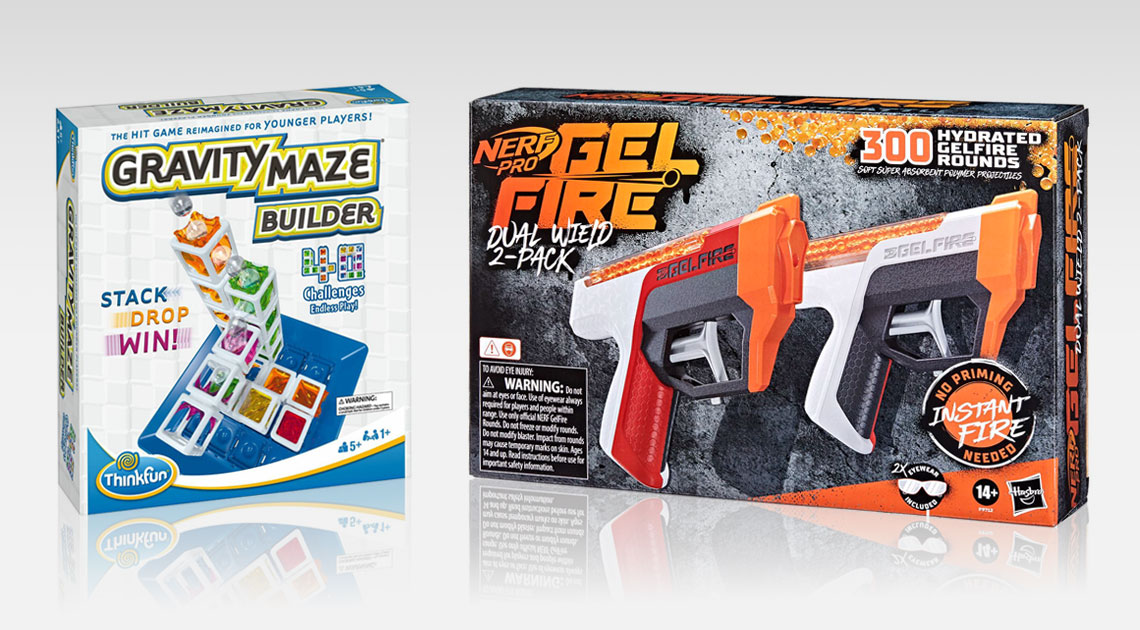
Maintaining a consistent design language, including color palette, package design architecture, typography, and imagery on packaging across the entire product line builds brand recognition and trust. The Nerf brand uses a distinct design language with bold fonts and strong textures that are consistently applied across all product packaging, making the brand easily identifiable on store shelves.
Adapting design for different toy categories
Keep in mind that different toy categories may require a unique approach to package design. Understanding the nuances of each category can inform design decisions that resonate with specific consumer segments. For educational toys, emphasizing educational aspects, such as skills developed or learning goals achieved, appeals to parents seeking toys that offer developmental benefits. ThinkFun, known for its educational games and puzzles, highlights cognitive benefits and gameplay mechanics on its packaging, targeting parents interested in educational play.
For action figures and collectibles, highlighting the toy’s features, such as an action feature, accessories and points of articulation, can cater to both children and collectors, offering visual appeal and generating desire and inspiring purchase. Funko Pop! packaging is a distinctively designed window box that allows collectors to display their figures while keeping them in mint condition.
For puzzles and games, clearly displaying the number of pieces and difficulty level conveys the challenge and fun of the game while ensuring durability for repeated use. Ravensburger puzzles packaging features beautiful imagery to showcase the final puzzle design, along with details on piece count and difficulty, helping consumers make informed decisions based on their skill level.
The impact of technology on toy package design
Technology plays an increasingly important role in toy package design, offering new opportunities to engage consumers and enhance the overall experience. Augmented Reality (AR) and Virtual Reality (VR) technologies can transform packaging into interactive experiences, allowing consumers to explore the toy’s features in a virtual environment.
For instance, LEGO uses AR apps that allow consumers to see their creations come to life on screen. By scanning the packaging with a smartphone, users can visualize how the assembled build will look and interact with it virtually, enhancing engagement and generating excitement even before the purchase is made. AR can provide interactive demonstrations of the toy’s features, where consumers can scan the packaging with their smartphones to see the toy in action, increasing engagement and interest.
QR codes on packaging can link consumers to digital content, such as instructional videos, games, or interactive stories related to the toy. Providing step-by-step assembly instructions or gameplay demonstrations through QR codes can enhance the consumer experience and reduce frustration.
Offering exclusive content, such as downloadable games or digital collectibles, can add value and incentivize purchases. Smart packaging with NFC (Near Field Communication) technology can create personalized experiences and build stronger connections with consumers. Using NFC technology to deliver personalized messages or greetings when the toy is opened adds a unique touch that can enhance the consumer’s emotional connection to the product. Linking packaging to loyalty programs or rewards systems encourages repeat purchases and brand engagement.
Thriving in the highly-competitive toy retail environment
Designing toy packaging that resonates with consumers requires a deep understanding of consumer shopping behavior and preferences. By focusing on visual appeal, clear communication, innovative design, brand consistency, and technology integration, toy brands can create packaging that attracts consumers, enhances the user experience, and drives sales. As the toy industry continues to evolve, embracing these strategies will be essential for brands looking to thrive in a competitive market.
If your packaging isn’t aligned with how parents and kids actually shop, even the strongest product can struggle at retail. Clear communication, visual impact, structural innovation, and digital integration all need to work together to support the buying decision in a matter of seconds.
Our approach to package design helps toy brands translate consumer insights into package design systems that attract attention, communicate value quickly, and build long-term brand recognition. If you’re ready to refine how your products compete on shelf and online, we’d welcome the opportunity to start that conversation.