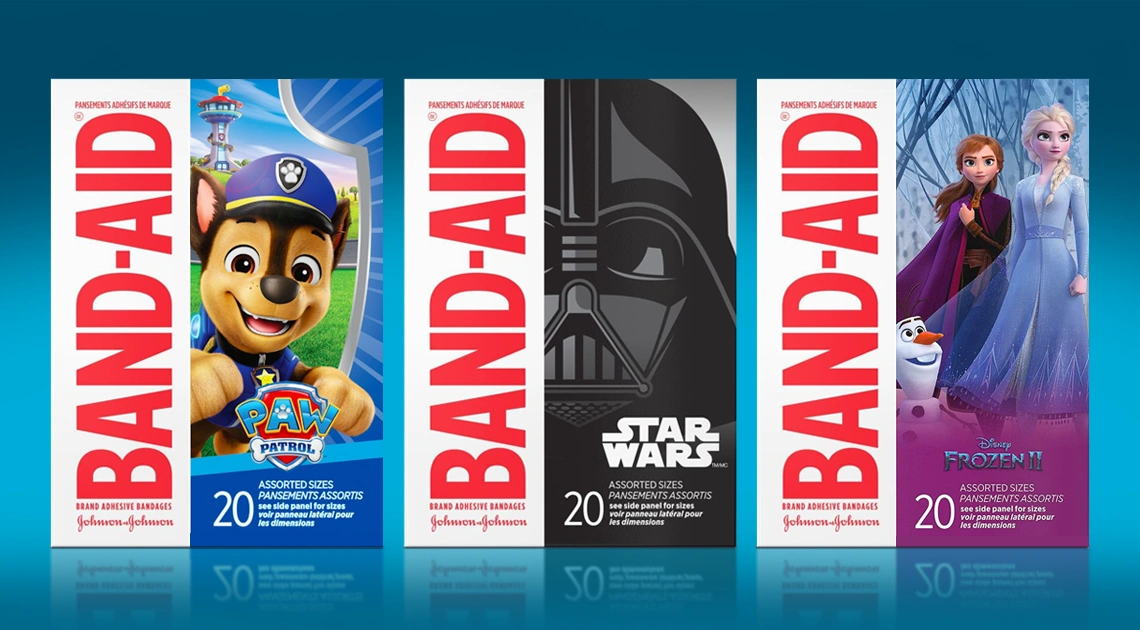
Designing packaging for a single brand is hard enough. Designing a system that accommodates dozens of licensed properties without losing clarity, consistency, or speed to market is where things get more complex.
I’ve spent years working on package design systems like this for our toy industry clients. And, the core challenge is always the same: you’re not just designing a package, you’re building a scalable package design system. One that can absorb everything from superheroes to preschool characters without breaking down.
The biggest mistake I see brand owners make is that they design one package at a time, while adhering to the licensed brand’s style guide. That approach works for a single SKU, but it falls apart as soon as you introduce a second licensed brand to the product line.
The right approach is to start with the system. Before you design anything, you need to define the structure. Where does the master brand live? Where does the licensed property live? Which elements stay fixed to establish visual consistency for the master brand, and which elements are allowed to change to accommodate the licensed brand?
In practice, that might mean your brand always occupies the top portion of the front panel, product information is locked into a consistent footer, and licensed artwork has a defined zone where it can live. Once those rules are in place, every new license becomes an extension of the system instead of a one-off design exercise.
Finding balance between the master brand and licensed brand
This is where many package design systems struggle. Either the licensed property overwhelms the brand, or the brand overpowers the license and removes the emotional appeal.
You have to decide early in the design process the role each brand plays in appealing to consumers. In some cases, the master brand carries the trust. In others, especially with kids’ products, the licensed brand is what generates excitement and drives the purchase decision.
The goal isn’t to choose one over the other. It’s to establish a clear visual hierarchy so both can appeal to the consumer in the proper manner.
Creating flexible packaging templates for licensed consumer products
One of the realities of designing packaging that needs to accommodate licensed bands is that not all licensors are created equal. Some provide robust packaging programs with flexible design assets and some breathing room for licensees to properly market their products. Others are highly restrictive, offering only a few approved package design assets and templates, with rigid standardization guidelines.
Your package design system has to work within both scenarios.
That means building in some flexibility. Areas dedicated to licensed brand imagery should accommodate different orientations. The design should hold up whether the artwork is detailed and busy or simple and minimal. If your package design system only works with ideal assets, it’s going to create problems as soon as you scale.
A well-built design template quietly handles this variability without forcing redesigns every time a new licensed brand is introduced.
Using color and typography to maintain brand consistency across SKUs
When you’re designing across multiple licensed brands, color and typography become your anchors.
Color can either follow the license or the brand. If you let every property dictate the palette, you get strong individual impact but risk losing visual cohesion when the product line is merchandised together. If you lock everything into brand colors, you maintain consistency but may lose some of the energy that makes the licensed brands appealing.
The most effective package design systems find a balance. They allow the license to bring its own personality while keeping key brand elements consistent. A consistent approach to product names, features, and callouts creates a common visual thread that ties everything together, even when the imagery varies widely.
Designing packaging for retail shelf impact
It’s easy to evaluate packaging on a product-by-product basis, but that’s not how customers experience it. At retail, your products show up as a group, often with multiple licenses sitting side by side. Therefore, your package design system needs to perform in that environment.
That means you need to think about how your product line reads from a distance. Can consumers quickly identify the product type? Is your brand recognizable across different licenses? Does the assortment feel cohesive, or does it look like a collection of unrelated designs?
Strong package design systems create visual consistency at shelf without sacrificing the individuality of each licensed property.
Standardizing your package design system for visual consistency
Licensed brands move quickly. There are approvals, seasonal launches, and shifting priorities that all put pressure on timelines.
A solid package design system reduces the amount of decision-making required for each new SKU. Your brand’s package design system should be standardized in the same way that a licensed brand’s packaging is standardized. Having guidelines in place for how your packaging should be designed will ensure that internal teams won’t deviate from the system.
That’s where the real efficiency comes in. Instead of redesigning your packaging to accommodate every new license you acquire, you’re following a standardized template. That saves time, reduces costs, and builds visual equity at retail.
Building a package design system that works in practice
Package design in this context is not about a single product or a single moment at shelf. It’s a system that defines how your brand shows up consistently, even as it extends across a wide range of licensed properties.
The strongest packaging systems are built with that reality in mind. They account for variability in licensed brand assets, differences in product categories, and the need to maintain a clear brand presence no matter what property is applied. They provide structure where it matters and flexibility where it’s needed, so the brand remains recognizable while each product still feels relevant.
At Design Force, Inc., we approach package design as both a creative and strategic discipline. Our focus is on building package design systems that support brand consistency across multiple packaging formats, while making it easier for teams to execute across entire product lines. The goal is not just to design packaging, but to create a framework that holds up as your brand expands.
If your packaging needs to support a broader range of products, audiences, or licensed properties, it’s worth stepping back and evaluating the system behind it. Learn more about how our approach to package design engages consumers on an emotional level, generates desire for the brand and influences their purchase decisions at retail.