For years, packaging in the licensing industry was treated as a supporting asset. The focus was almost always on the property itself. If the character, entertainment franchise, sports brand, or lifestyle IP was strong enough, the thinking was simple: the product would sell. That mindset no longer reflects how consumers shop or how licensed brands compete.
Today, licensed product package design plays a direct role in brand perception, retail performance, consumer trust, and long-term franchise value. Packaging is no longer the final step in the process. It is part of the product experience itself.
As someone who has worked extensively in the discipline of licensed product package design, I have seen this shift happen in real time. Retail environments have become more crowded. Digital shopping has changed how consumers discover products. Licensing programs have become more sophisticated. And audiences now expect every brand touch point to feel intentional.
Packaging sits at the center of all of it.
Strong licensed product package design does far more than feature the property logo and key character art. It communicates quality. It reinforces story. It creates emotional connection. It helps consumers instantly understand where a product belongs within a franchise ecosystem. Most importantly, it gives licensors and retailers confidence that the brand is being represented correctly. That matters now more than ever.
Licensed product package design has become a critical part of the brand experience
Consumers interact with packaging before they interact with the product itself. In many categories, packaging is the first physical experience a consumer has with a licensed brand. That reality changes the role packaging plays within a licensing program.
When packaging is executed strategically, it creates visual consistency across product lines and throughout retail channels. It gives licensed brands a unified visual language that consumers recognize immediately.
This is especially important for entertainment and character-driven brands that extend across multiple categories. A franchise may appear simultaneously in toys, food and beverage, beauty, collectibles, apparel, home goods, and consumer electronics. Without a cohesive package design strategy, the brand experience quickly becomes fragmented. Licensed product package design helps prevent that fragmentation.
The strongest licensed product package design systems are built to scale while still maintaining brand integrity. That means balancing licensor requirements, retailer expectations, manufacturing realities, consumer behavior, and shelf impact all at once. That balance is where experienced package design teams create measurable value.
Retail shelf competition is more intense than ever
One of the biggest changes in recent years is the sheer amount of visual competition happening at retail. Consumers are making decisions faster. Shelf space is getting tighter. And retail buyers are expecting products to communicate value almost instantly. In licensed product categories, the challenge becomes even more complex because many competing products may feature equally recognizable IP.
That means packaging often becomes the deciding factor.
A licensed brand’s packaging has to tell consumers why this version of the product deserves attention. It has to create hierarchy. It has to establish quality cues. It has to connect emotionally while still remaining commercially effective. This is where thoughtful licensed product package design can significantly improve retail performance.
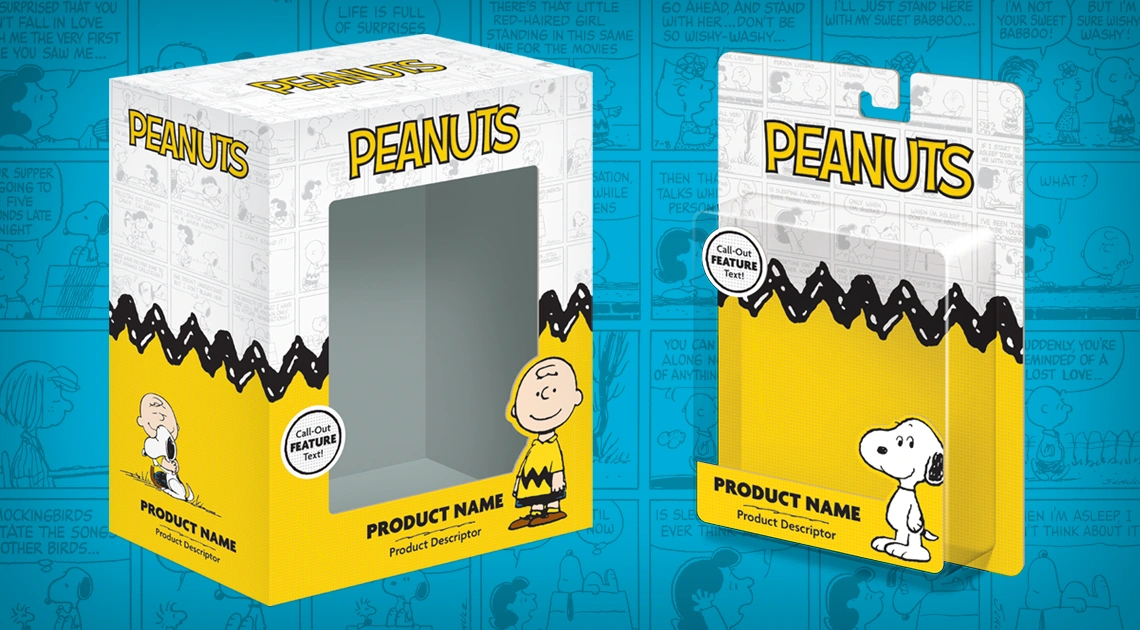
We have seen this firsthand in our own work when redesigning package design systems for licensed brands that needed stronger differentiation at retail. In our refresh of the core Peanuts global packaging program, the goal was not simply to make the packaging look better. The objective was to create a package design system that improved franchise recognition through the use of distinctive package design architecture. Our solution for the refresh is rooted in the use of an iconic design element that is inherent to the brand – the zig-zag from Charlie Brown’s sweater. This, in conjunction with the yellow and black color palette and the use of the iconic Peanuts comic strip as a repeat pattern, gave the packaging for all Peanuts licensed products a powerful, new look that’s instantly identifiable and visually consistent in every retail category.
Digital retail and e-commerce have changed packaging requirements
The rise of e-commerce has fundamentally changed how packaging needs to perform. Packaging is no longer viewed only from a few feet away on a retail shelf. It now has to work as a thumbnail image, a mobile shopping experience, a social media asset, and an unboxing moment. That changes design priorities significantly.
Licensed product package design now requires much stronger visual clarity, cleaner hierarchy, and faster communication. Consumers scrolling online don’t spend time decoding cluttered package design systems. The packaging has to communicate instantly.
This has created a major shift toward more disciplined design systems within licensing programs. Strong typography, simplified messaging, and recognizable visual assets matter far more today than they did a decade ago.
The unboxing experience also matters more than ever. Consumers regularly share purchases across social platforms, especially in categories tied to fandom, collectibles, gaming, beauty, and entertainment. Packaging has become part of the shareable experience. For licensors, that means packaging now contributes directly to organic visibility and brand amplification.
Packaging helps protect brand integrity across licensing programs
One of the most overlooked aspects of licensed product package design is brand stewardship. Licensors invest heavily in building emotional relationships with their brand’s audiences. Packaging plays a major role in either reinforcing or weakening those relationships.
Poorly executed package design can make even strong IP feel inconsistent, outdated, or low quality. On the other hand, strategically executed package design elevates perceived value and strengthens consumer trust. That’s why licensors are paying much closer attention to their brand’s package design system than they did in the past.
Many licensing programs now require more robust packaging guidelines, approval processes, and brand governance because packaging directly impacts how consumers perceive the property. This is particularly important for legacy entertainment brands, premium lifestyle properties, and franchises with highly engaged fan communities. Consumers notice inconsistencies immediately. Packaging is often where those inconsistencies become most visible.
A strong licensed product packaging strategy protects against that by establishing a repeatable design system that maintain consistency while still allowing flexibility for retailers, seasonal launches, regional programs, and new product extensions.
Licensed product packaging is increasingly connected to long-term franchise growth
The licensing industry has become more focused on long-term franchise building rather than short-term product cycles. Packaging supports that evolution.
When package design systems are developed strategically, they create continuity across years of product launches. They help brands remain recognizable even as trends, retailers, and product categories evolve. That consistency builds consumer familiarity over time. It also helps licensors create stronger cross-category ecosystems where every product contributes to a larger brand experience.
In many ways, packaging now functions similarly to advertising. It communicates positioning, reinforces identity, and helps maintain relevance in highly competitive markets. The difference is that packaging operates directly at the point of purchase, which gives it enormous influence.
Why strategic licensed product package design matters more than ever
Licensed brands can no longer afford to view packaging as a secondary production step. Packaging has become a core brand asset that directly impacts visibility, retail performance, consumer engagement, and brand perception.
The most successful licensing programs leverage this understanding. They invest in package design systems that are scalable, strategically structured, visually disciplined, and built to support long-term franchise growth. That’s where experienced licensed product package design partners create meaningful value.
Today, effective package design requires an understanding of licensing strategy, retail psychology, consumer behavior, manufacturing realities, digital commerce, and brand stewardship. When all of these elements come together, packaging becomes far more than a a vehicle that contains the product. It becomes part of the brand itself.
If your team is evaluating how to strengthen retail presence, improve franchise consistency, or elevate consumer perception across your brand’s licensing program, our proprietary approach to licensed product package design helps licensed brands perform strategically across both retail and digital environments.